// General

Noise at the workplace is frequently underestimated.

The effects of loud noise and continuous noise can make us ill and adversely affect performance. Noise, especially at the workplace, is often underestimated and the dangers of noise go unrecognised.

In Europe, noise-induced loss of hearing is an increasingly serious problem and is the most frequently reported occupational illness. When hearing is lost due to noise, sound waves have damaged the hair cells in the inner ear. Once they have died, they cannot grow back.

This is particularly tragic because, with the correct hearing protection, every single case of noise-induced loss of hearing is 100% avoidable.

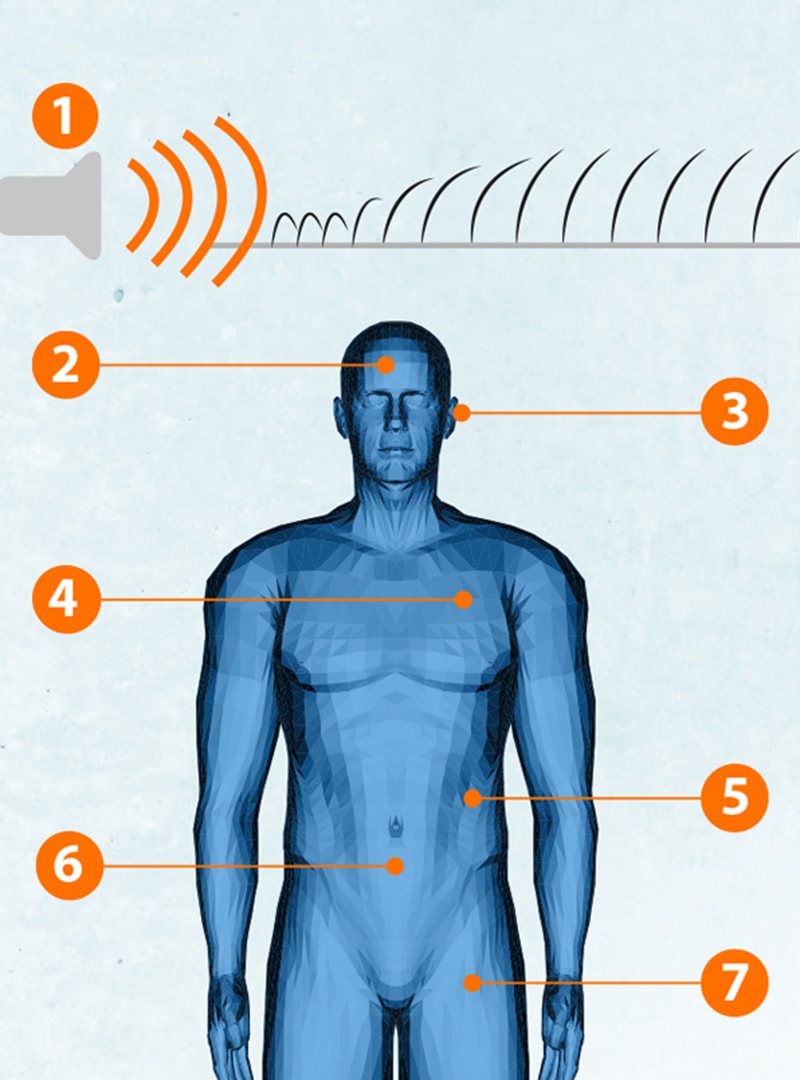
Noise has a damaging effect not only on our hearing – it can generate damaging effects on the entire body. Noise stress can cause headaches, metabolic problems, digestive complaints and many other complaints.

At what point must hearing protection be worn?

// INSTRUCTIONAL VIDEOS
Hearing protection – using disposable earplugs
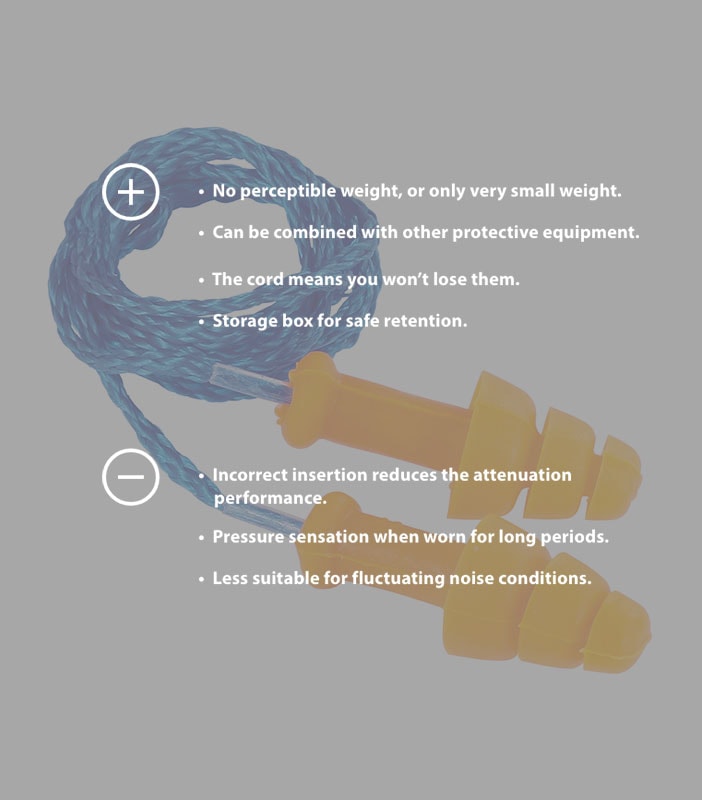
Hearing protection – using reusable earplugs
Hearing protection – using banded earplugs
Hearing protection – using ear defenders
// SELECTION AID

Select the right hearing protection

The following points must be taken into account when choosing hearing protection:

  • Determine the noise level at the workplace.
  • Respect personal preferences, since these can have a decisive effect on wearer acceptance.
  • Observe the SNR value: This specifies how much the product reduces the prevailing noise levels.
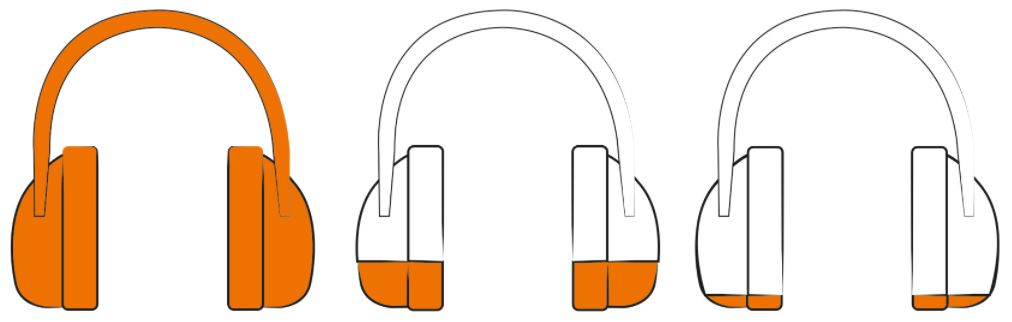
  • Do not choose noise attenuation that is too high: Lower than a residual noise level of 70 dB counts as overprotection, which leads to comprehension problems and can create a sense of isolation.

Depending on the type of hearing protection used, a correction value to allow for variance must be included. The residual noise level can be determined based on the noise level and the noise attenuation.

Make sure that the hearing protection is worn 100% of the time in noisy working environments. Even short periods during which hearing protection is not worn lead to complete loss of the protective effect.

// SELECTION AID

Banded earplugs

Earplugs and dispensers

Earplugs and dispensers

Shell type ear protectors

Electronic ear protection

Banded earplugs

Electronic ear protection

Banded earplugs

Earplugs and dispensers

Shell type ear protectors

Shell type ear protectors

Electronic ear protection

// SERVICES

Ear Fit validation & otoplastics

Using the E-A-Rfit validation, you can determine which type of hearing protection is right for you, and how well the hearing protection works for each individual employee.

  • This takes place in 3 steps.
    Step 1: The employee puts on their hearing protection. The system determines the PAR value within a few seconds. This value specifies the level of noise attenuation for this employee wearing this protection. Step 2: A dual-element microphone is used. This is used to measure the noise attenuation of the hearing protection as worn by the employee across the typical noise frequencies. Step 3: The personal attenuation rating (PAR value) and fit variability are determined.

Accordion Content

Step 1: The employee puts on their hearing protection. The system determines the PAR value within a few seconds. This value specifies the level of noise attenuation for this employee wearing this protection.

Step 2: A dual-element microphone is used. This is used to measure the noise attenuation of the hearing protection as worn by the employee across the typical noise frequencies.

Step 3: The personal attenuation rating (PAR value) and fit variability are determined.

Otoplastics denote hearing protection solutions that are produced individually for each person based on an impression that is taken of the individual’s auditory canal. Tailored hearing protection otoplastics can be worn comfortably for 8 hours each day and offer innovative all-round protection against the risks of noise.

  • Features and benefits of tailored hearing protection:
    • Comfortable to wear
    • Excellent communication function due to optimum noise absorption.
    • Easy to use and handle.
    • Easy and hygienic cleaning.
  • Advantages of procuring tailored hearing protection:
    • Cost-effective and economical due to the long service life.
    • Guaranteed functionality and protective properties thanks to professional inspection.
    • Customer advice, training, and greater awareness of noise-related issues thanks to on-site service
    • Sustainable and environmentally friendly.

Lorem ipsum dolor sit amet, consectetur adipiscing elit. Ut elit tellus, luctus nec ullamcorper mattis, pulvinar dapibus leo.

  • Comfortable to wear
  • Excellent communication function due to optimum noise absorption.
  • Easy to use and handle.
  • Easy and hygienic cleaning.

Lorem ipsum dolor sit amet, consectetur adipiscing elit. Ut elit tellus, luctus nec ullamcorper mattis, pulvinar dapibus leo.

  • Cost-effective and economical due to the long service life.
  • Guaranteed functionality and protective properties thanks to professional inspection.
  • Customer advice, training, and greater awareness of noise-related issues thanks to on-site service
  • Sustainable and environmentally friendly.
// Norms and standards

Directives and standards for hearing protection

On 21 April 2018 the PPE regulation 2016/425 superseded the previous directive 86/686/EEC. As a result, the EU recognised that harmful noise causes irreversible harm to health and raised the classification of hearing protection products to risk category III. Special provisions are applicable to products in risk category III. 

In many EU member states, practical instruction by the company of the employees in respect of protective equipment of Category III is a mandatory requirement. From 21 April 2019, manufacturers are only allowed to introduce to market hearing protection products in compliance with the new PPE regulation.

  • The following European standards apply to hearing protection
    EN 352-1: Ear defenders EN 352-2: Earplugs EN 352-3: Helmet ear defenders EN 352-4: Level-dependent ear defendersEN 352-5: Ear defenders with active noise compensation EN 352-6: Ear defenders with communication equipment EN 352-7: Level-dependent attenuating earplugs EN 352-8: Audio ear defenders for conversational applications (e.g. radio) EN 458: Recommendations for the selection, use, care and maintenance of hearing protection

Accordion Content

EN 352-1: Ear defenders
EN 352-2: Earplugs
EN 352-3: Helmet ear defenders
EN 352-4: Level-dependent ear defendersEN 352-5: Ear defenders with active noise compensation
EN 352-6: Ear defenders with communication equipment
EN 352-7: Level-dependent attenuating earplugs
EN 352-8: Audio ear defenders for conversational applications (e.g. radio)
EN 458: Recommendations for the selection, use, care and maintenance of hearing protection